
Many families keep an urn at home after a loved one dies. It may sit on a shelf for months or years while you decide what comes next. If this sounds familiar, you are not alone, and there is no need to rush.
This guide explains what is interment of ashes and walks you through the cemetery placement options available to Langley families. You will learn where ashes can be placed, how to compare choices, and what to expect. This article covers placement, memorial choices, and cemetery services.
Key takeaways:
- Interment of ashes means placing cremated remains in a permanent resting place at a cemetery.
- You can choose from several placement options, including garden plots, columbarium niches, family graves, estates, and mausoleums.
- Planning involves confirming the space, permissions, timing, service, and memorial details with the cemetery.
What does interment of ashes mean?
Interment of ashes means placing cremated remains (or ashes) in a permanent resting place at a cemetery.
You may also hear the words “cremation burial” or “inurnment.” Usually, these words mean the same thing: placing an urn, or the ashes inside it, in a cemetery space. The placement can be in the ground or above the ground. It depends on the cemetery and the space you choose.
Where can ashes be placed in a cemetery?
Every cemetery is different, and most offer several ways to place ashes. Four most common options are:
In-ground cremation plot or garden placement
Some cemeteries set aside plots for cremated remains, while others create landscaped gardens for in-ground placement. For many families, a dedicated resting place offers comfort: there’s somewhere familiar to visit, pause, and remember a loved one.
At Bakerview Memorial Cemetery in Langley, Wisteria Gardens offers a peaceful, garden-like setting with natural landscaping, water features, and koi ponds. Families can choose an in-ground cremation plot, including single or companion spaces, or a garden niche wall. There’s also room to add a personal touch with a plaque or, where available, a floral vase.
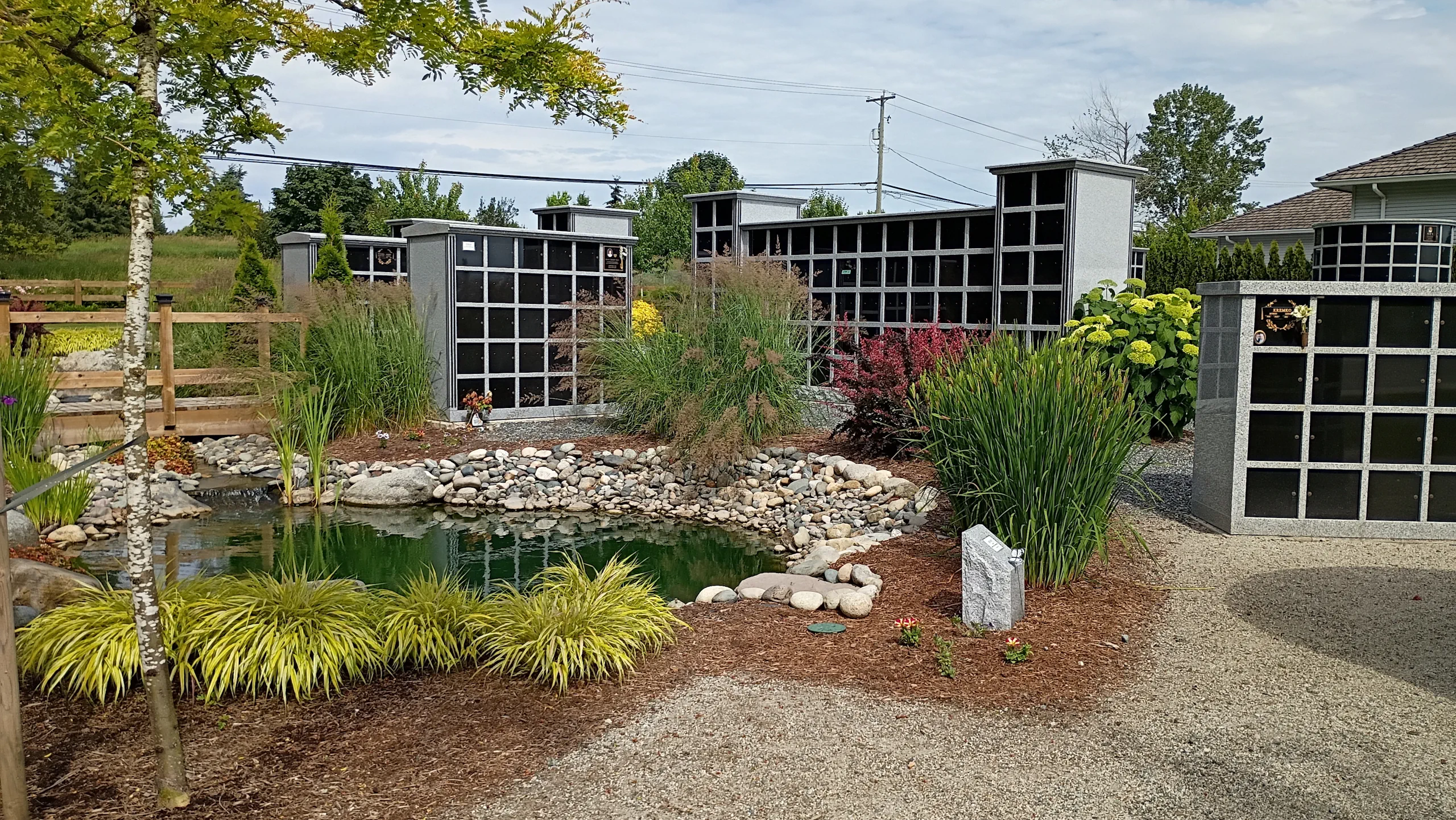
Wisteria Gardens offers a peaceful garden setting for interment of ashes, with landscaped grounds, a pond, and cremation niche walls at Bakerview Memorial Cemetery in Langley.
Because the garden is designed for quiet reflection, visits can feel calm and unhurried. And with a clear place to gather, families can remember together, share stories, and return whenever they feel ready.
Columbarium niche
A columbarium is a structure with individual spaces, called niches, for cremated remains. Unlike an in-ground plot in a garden, where the resting place sits within the landscape, a niche gives families a distinct, above-ground place to visit. Usually, the niche has a front that can be personalized with a memorial plaque.
Families may appreciate how clearly defined and easy to find a niche can be. At Bakerview, the Somerset Columbarium offers individual and companion niches with customizable front plates, while the Windsor Columbarium has personalization options and space for small floral holders. These details can make it easier to create a personal tribute within a well-organized setting.
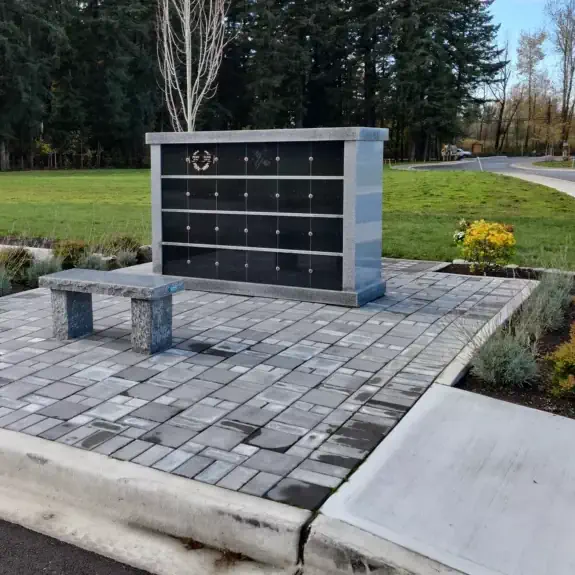
The garden setting at Bakerview Memorial Cemetery in Langley includes above-ground columbarium niches, offering families a clearly marked place to visit and remember.
At the same time, a columbarium may feel more structured than a garden, so it might not suit families who prefer a natural, landscaped setting. Niches also have size and personalization guidelines, which are worth discussing with the cemetery.
Still, for families who value a clearly marked resting place and a simple spot to pause and remember, a columbarium can feel reassuring.
Placement with family
For some families, one of the greatest comforts is knowing loved ones can remain together. Depending on the cemetery and the space available, cremated remains may be placed in an existing family grave or a space reserved for the family.
This differs from a garden plot or columbarium niche. Rather than choosing a separate resting place, the family is adding a loved one to an existing family location.
One advantage of this option is it creates a shared place to visit and honour several generations. However, it may not be available in every grave or family space. The cemetery needs to confirm that there’s room and that the required permission has been given by the person who holds the interment rights, or the right to use the grave or plot.
Because the arrangements depend on the existing space and its rights holder, you may have fewer choices about the exact location or memorial details than with a newly selected plot or niche.
Family estates and mausoleums
For families who hope to keep several loved ones together, a family estate or mausoleum may offer room for a shared, lasting memorial.
A family estate is a larger cemetery space planned for multiple relatives. A mausoleum, by contrast, is an above-ground structure where caskets and cremated remains may be placed.
Compared with a single garden plot, columbarium niche, or placement in an existing grave, these spaces can give families more room to plan for relatives who may want to rest together.
However, larger family arrangements also involve more decisions: families should ask about capacity, layout, who may be placed there, memorial guidelines, availability, and cost. Since each cemetery’s rules differ, a conversation with the cemetery can help clarify whether the space fits the family’s wishes.
How to arrange interment of ashes
The process often feels more manageable once you know what each step involves. Your choices connect—the placement you select helps determine the memorial details, while your family’s needs can shape the service and timing.
- Contact the cemetery. Share whether you’re arranging placement for a loved one or planning ahead. Mention any family, faith, or cultural needs so the cemetery can explain relevant options and requirements.
- Choose the placement and confirm the details. Once you’ve discussed available spaces, ask about costs, timing, and any rules that apply. If you’re considering an existing family grave, confirm who must authorize the placement. These details help establish what can happen next.
- Decide whether to hold a service. A graveside or committal service is a gathering at the placement site. It can be brief or more personal, depending on your family’s wishes. If you’d like one, discuss the format and timing with the cemetery so the service fits the placement arrangements.
- Select a memorial. Depending on the space, you may choose a marker, plaque, or niche front. Ask about design guidelines, approval, and installation timing; those details can vary by placement and may affect when the memorial is ready.
- Coordinate the arrangements. After the details are agreed, the cemetery can confirm the placement date and any on-site committal service. Arrangements with a funeral provider, such as urn transportation, are handled separately, so clarify who is responsible for each part.
If the urn has been at home for some time, you can still contact the cemetery when you feel ready. Once your choices and arrangements are settled, the placement can be scheduled.
When you’re ready to choose a place to return and remember
Interment of ashes means choosing a lasting cemetery place where family and friends can return to remember someone they love. In Langley, options may include a garden setting, a columbarium niche, placement with family, or a larger family estate or mausoleum. Each offers a different way to create a meaningful resting place, and the right choice depends on your family’s wishes, practical needs, and preferences.
If you have an urn at home and are still deciding what comes next, there’s no need to rush. When you feel ready, speaking with a local cemetery can help you understand the available spaces, memorial choices, and next steps.
Published: November 6, 2026
